
Montréal is the largest French-speaking city in the Americas and one of the most dynamic francophone cultural centres in the world.
For anyone looking to learn French, the city offers a unique environment where language learning extends far beyond the classroom.
In this guide, you will discover how the Alliance Française de Montréal helps learners build their French skills through a combination of structured courses, cultural immersion, and pedagogical support tailored to different learning goals and levels.
Why Learn French in Montreal?
Learning French in Montréal offers a unique advantage: beyond formal lessons, learners encounter French throughout their daily lives — on public transportation, in cafés and restaurants, in cultural institutions, at work, and in interactions with local communities.
This constant exposure creates opportunities to practice and reinforce language skills in authentic situations.
French can also play an important role in professional development, academic opportunities, and social integration in Québec. Many employers value French language skills, while colleges and universities often require or encourage French proficiency depending on the program and field of study.
For newcomers, learning French can facilitate everyday interactions and help build stronger connections within the community. For others, it may simply be a way to participate more fully in the rich cultural life of Montréal and Québec.
Learn French in the Heart of Old Montréal
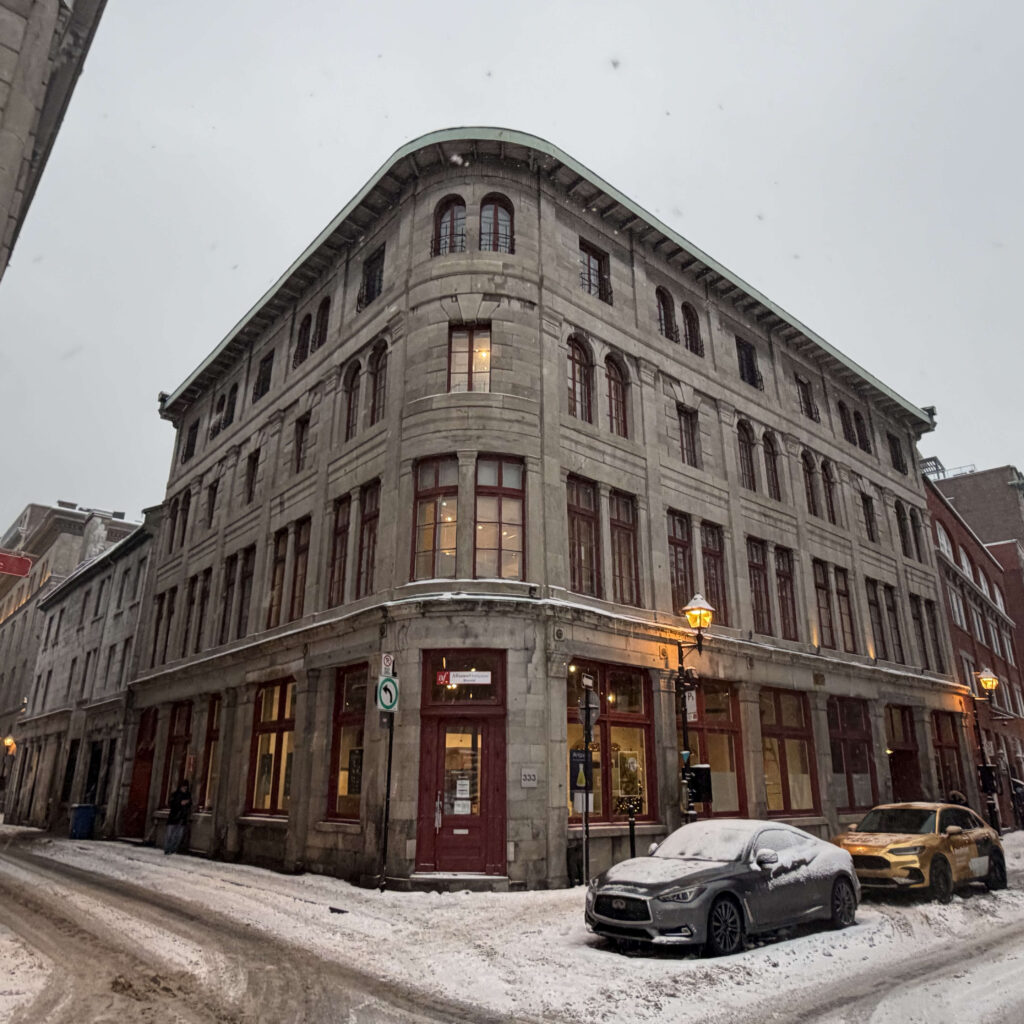
Located at 317 Place d’Youville, near Montréal’s historic Old Port, the Alliance Française de Montréal offers a unique learning environment that combines language education and cultural activities in a historic building featuring modern classrooms, an official French examination centre, and a cultural space dedicated to francophone arts, ideas, and exchanges.
For learners, this means that French learning is not limited to classroom instruction. Students become part of a broader francophone environment where language, culture, and community are closely connected.
How Are French Courses Taught at the Alliance Française de Montréal?
French group courses at the Alliance Française de Montréal are based on the Common European Framework of Reference for Languages (CEFR), an internationally recognized framework used to describe language proficiency and learning progression. Our teaching approach places learners at the centre of the learning experience.
Rather than focusing exclusively on grammar rules, courses are designed to help students develop practical language skills that can be applied in a variety of personal, academic, and professional contexts.
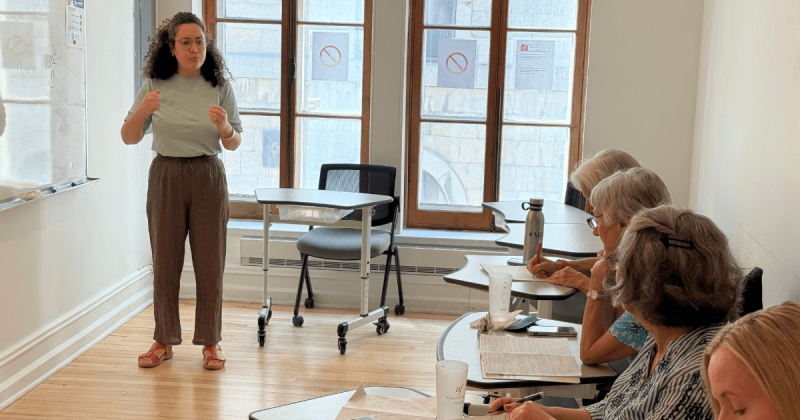
Classes are taught in small groups, creating an environment that encourages participation, interaction, and personalized support throughout the learning process. This action-oriented approach reflects the philosophy of the CEFR, which emphasizes what learners can do with the language and how they can use it to accomplish meaningful tasks and objectives.
Throughout their learning journey, students develop linguistic, pragmatic, and sociocultural competencies while being guided by instructors specialized in French as a Foreign Language (FLE).
Understanding the Learning Journey at Each Level
French courses at the Alliance Française de Montréal follow a progressive learning pathway based on the CEFR framework. Each level is divided into smaller sub-levels, allowing learners to build their skills gradually while receiving regular feedback and guidance from their instructor.
The learning journey is designed to help students move from basic communication to advanced fluency through a structured sequence of courses adapted to their needs and objectives.
| CEFR Level | Course Stage | Hours | Sub-levels | Typical Outcome |
|---|---|---|---|---|
| A1 | Discover | 84h | 3 | Communicate in simple everyday situations |
| A2 | Survive | 112h | 4 | Handle routine conversations independently |
| B1 | Intermediate | 140h | 5 | Manage most everyday situations in French |
| B2 | Advanced | 140h | 5 | Communicate confidently in professional and academic contexts |
| C1–C2 | Independent | 150h+ | Up to 12 | Express complex ideas with fluency and precision |
For a detailed explanation of French proficiency levels, official equivalencies, and expected competencies at each stage, consult our complete guide to French levels.
How Long Does It Take to Progress to the Next Sub-Level?
French language learning is a gradual process, and every learner progresses at a different pace depending on factors such as previous language experience, study habits, exposure to French outside the classroom, and personal objectives.
At the Alliance Française de Montréal, each sub-level corresponds to 28 hours of instruction. Because learners have different schedules and goals, several course formats are available throughout the year:
| Course Format | Typical Duration (per Sub-Level) | Ideal For |
|---|---|---|
| Regular | Approximately 7 weeks | Learners looking for a balanced pace |
| Accelerated | Approximately 4 weeks | Learners who want faster progression |
| Intensive | Approximately 2 weeks | Learners seeking rapid immersion and progression |
Regardless of the format chosen, all learners follow the same pedagogical progression and learning objectives. The difference lies in the pace at which the material is covered.
This flexible structure allows students to adapt their learning journey to their personal, academic, or professional commitments.
Resources to Support Your Learning Journey
Contemporary Learning Materials
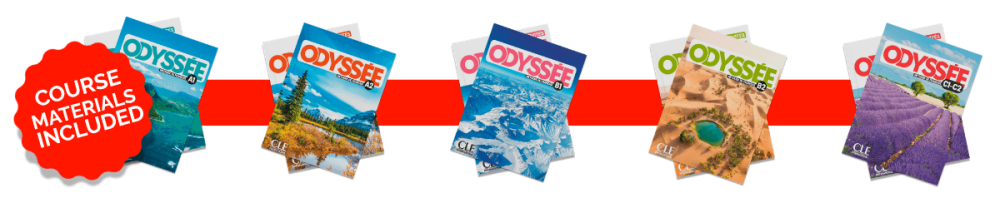
French group courses use the Odyssée textbook series, a modern and interactive teaching resource designed for learners of French as a foreign language. The course material is included with registration, allowing students to benefit from a structured learning pathway from the very beginning of their studies.
The Odyssée textbook series helps learners:
- engage with contemporary topics and authentic situations
- develop real-world communication skills
- participate in discussions and critical thinking activities
- discover the diversity of the francophone world beyond France
Interactive Learning Through Apolearn
Students also benefit from access to Apolearn, a digital learning platform that complements classroom instruction.
Through Apolearn, learners can:
- complete interactive exercises and activities
- reinforce concepts covered in class
- practice independently between lessons
- access additional learning resources
- maintain regular contact with French throughout their studies
Discover the Francophone World with Culturethèque
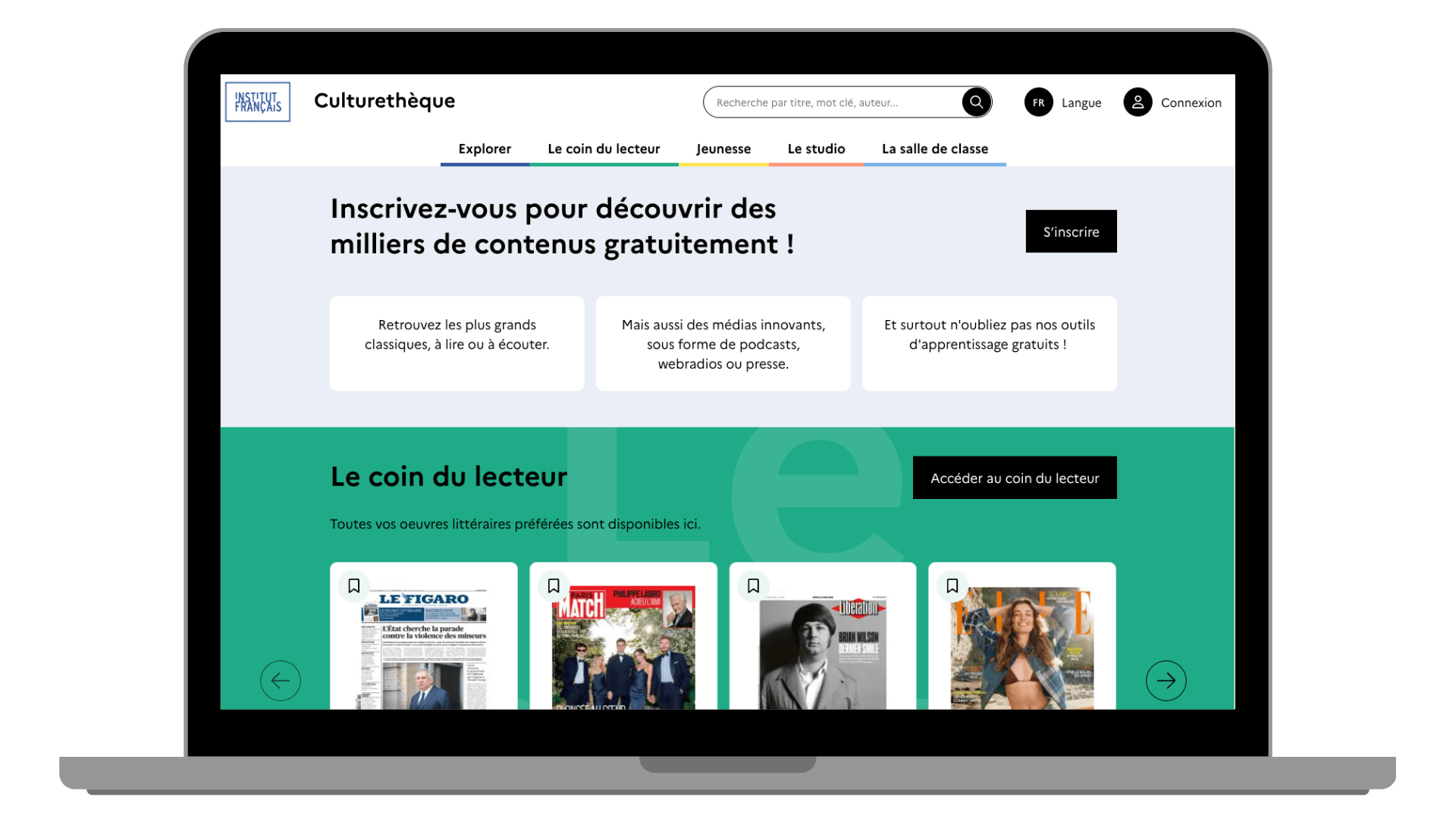
Students enrolled at the Alliance Française de Montréal also have access to Culturethèque, the digital media library created by the Institut français.
Culturethèque provides access to a wide range of francophone cultural resources, including:
- bestselling books and e-books
- magazines and newspapers
- films and documentaries
- podcasts and audio content
- educational resources and cultural materials
Whether learners are beginning their French journey or already studying at an advanced level, Culturethèque offers valuable opportunities to explore authentic content and strengthen their connection with the French-speaking world.
A Cultural Program That Complements Language Learning
In addition to the learning resources available to students, the Alliance Française de Montréal offers regularly a cultural program organized by a dedicated cultural team, creating additional opportunities to engage with French in authentic contexts. Activities may include:
- workshops
- film screenings and discussions (Ciné-rencontres)
- art exhibitions
- conferences and guest speakers
These activities allow students to experience French beyond the classroom while connecting with Montréal’s vibrant francophone community.
Students at AFMTL may also benefit from free admission or discounted rates for selected cultural activities!
A Global Francophone Network
Present in more than 130 countries, the Alliance Française network brings together hundreds of institutions committed to French language education and cultural exchange.
For students, this means learning within an institution that benefits from the resources, experience, and pedagogical standards of a global francophone network while remaining deeply rooted in Montréal’s local community.
Professional development is an important part of this approach. Teachers and pedagogical teams regularly participate in training sessions, workshops, and professional exchanges focused on language teaching methodologies, French as a Foreign Language (FLE), and official French language certifications such as the TCF, TEF and DELF-DALF.
These exchanges take place not only within Canada, but also across the international Alliance Française network, creating opportunities to share expertise and remain aligned with evolving pedagogical standards.
What If You Already Speak French?
Not every learner begins their French journey as a beginner. Many students arriving at the Alliance Française de Montréal have already studied French through previous courses, government-funded francization programs, academic studies, or everyday life in Québec.
Others may already communicate comfortably in French but wish to maintain, strengthen, or refine their skills.
For these learners, the Alliance Française de Montréal offers a variety of workshops designed to support different objectives and interests.
Some workshops focus on specific language competencies, such as phonetic correction, grammar revision, or writing communication.
Others offer opportunities to practice French in a relaxed, creative, and engaging environment through activities such as conversation groups, literary cafés, theatre workshops, and creative writing sessions.
Whether your goal is to improve a particular skill, gain confidence in speaking, or simply continue engaging with French on a regular basis, there are learning opportunities adapted to different profiles and levels.
Start Learning French in Montréal
Whether you are discovering French for the first time or continuing a learning journey that began elsewhere, the Alliance Française de Montréal offers French group courses adapted to different levels, objectives, and learning styles.
Through a combination of structured courses, experienced instructors, immersive learning opportunities, and complementary resources, learners can develop practical communication skills and progress with confidence.
Already speak some French? A French placement test can help identify the course that best matches your current level and learning goals.
Explore our French courses in Montréal and find the right starting point for your learning journey!