
Living in Montreal Without French What You Need to Know (and How to Learn)

Living in Montreal Without French: What You Need to Know (and How to Learn) 

Thanks to its international character, Montréal is one of the easiest places in Québec to navigate in English. Many newcomers find housing, open a bank account, shop, and even begin working without speaking much French.

However, daily life and long-term integration are not always the same thing. As your personal, professional, and social life grows, French becomes increasingly important, not only for accessing more opportunities, but also for participating more fully in life across Montréal and Québec.

In this article, you’ll discover when French makes the biggest difference, how Québec’s language environment has evolved in recent years, and the different ways newcomers can begin learning French after arriving in Montréal.

Can You Live in Montréal Without Speaking French?

Compared with many other cities in Québec, Montréal offers a more bilingual environment. In many neighborhoods, shops, restaurants, and businesses serve customers in both English and French, which makes the city more accessible for newcomers who do not yet speak French.

This often leads to a common misconception: that French is not really necessary in Montréal. While it is possible to manage many everyday situations in English, this experience does not necessarily reflect life across the rest of Québec, where French is the primary language of work, public services, and daily communication.

Even within Montréal, newcomers may encounter situations where speaking French makes everyday life easier. Interacting with neighbors, accessing certain public services, participating in local activities, or applying for a wider range of jobs can become more straightforward with at least a basic knowledge of French.

"The first question to ask yourself is: what are your long-term goals?"
Kelly Goudin
Kelly Goudin
Teaching Manager (Group Courses)

Someone planning to stay in Montréal for a few months will naturally have different language needs from someone who wants to build a careerraise a familyor settle permanently in Québec. The longer you plan to stay, the more valuable French becomes. 

Why French Opens More Doors

Living in Montreal Without French

Montréal is one of Canada’s most multilingual cities, but according to the 2021 Census, French remains the most widely spoken language across Québec and is spoken by most Montréal residents. While English can often help during the first stages of settling in, learning French gradually makes everyday life – and future career opportunities – much easier. 

Over the past few years, French has also become increasingly important in Québec’s professional and public life. Measures such as Bill 96 reinforce the role of French as the province’s common language, particularly in areas such as work, public administration, and access to services. 

This does not mean it is impossible to build a life in Montréal without speaking French. It does mean, however, that learning the language can significantly broaden your professional options and make everyday interactions easier. Professionally, speaking French expands the range of jobs available and supports long-term career growth. It also helps when communicating with neighbours, accessing public services, participating in community activities, or navigating healthcare and administrative procedures. 

Learning French is therefore about much more than meeting language requirements. It gives newcomers greater independence, stronger community connections, and the confidence to participate more fully in life across Montréal and Québec. 

If your goal is to build a career in Québec, our guide French for Work in Québec: How Language Can Advance Your Career explains how French is used across different professions and why employers increasingly value strong communication skills in French.

When Does French Make the Biggest Difference?

For many newcomers, the need for French doesn’t appear overnight. It becomes more noticeable as everyday life expands beyond the first few months of settling in. 

Finding a job, speaking with a healthcare professional, communicating with your child’s school, participating in community activities, or simply chatting with neighbours are all situations where French can make interactions easier and more rewarding. 

"You need to think about your long-term goals. Do you want to grow professionally in Québec? Do you want to build your life here? Those questions will help determine how important French will be in your daily life."
Amélie
Amélie Branconnier
Teaching Manager (Customized and Corporate Courses)
Beyond work and public services, French also makes it easier to participate in Montréal’s cultural life. Whether attending festivals, joining local associations, volunteering, or simply meeting new people, speaking French helps newcomers build relationships, gain confidence, and feel connected to the community.

If you’re ready to move beyond the basics, our guide How to Become Fluent in French: A Complete Guide for Intermediate Learners explores the habits and learning strategies that help learners gain confidence and use French more naturally in everyday life.

Finding the Right French Learning Path After Arriving

Once you’ve decided to learn French, the next step is choosing the learning pathway that best matches your goals, schedule, and current level. Fortunately, newcomers in Montréal have several options.

For some, government-funded francisation programs provide an excellent starting point, particularly for learners who are eligible and looking for structured language training. Others may prefer a language school that offers greater flexibility, smaller groups, private lessons, or courses designed around specific professional or personal objectives.

For example, someone preparing to enter the job market may have different needs from a learner who wants to feel more comfortable in everyday conversations or simply become more independent in French. Choosing a learning pathway that reflects those objectives often leads to stronger motivation and more consistent progress.

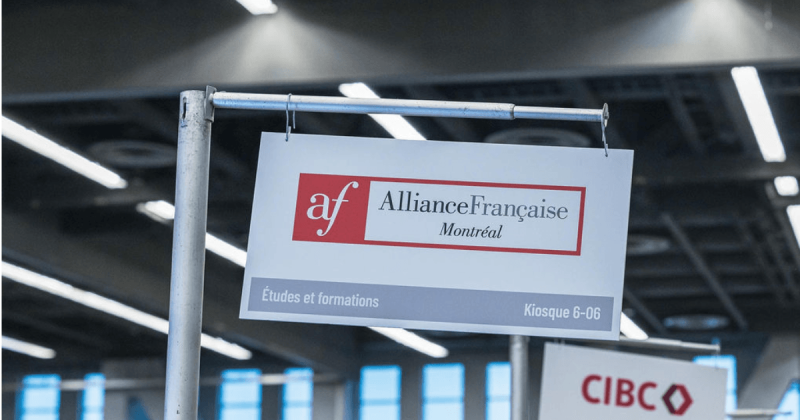
AFMTL au Salon

Supporting newcomers is also an important part of the Alliance Française de Montréal’s mission. Through its participation in events such as the Salon de l’immigration et de l’intégration au Québec, the AFMTL helps future and newly arrived residents explore the different options available for learning French and integrating into life in Montréal.

As part of the worldwide Alliance Française network, which is present in more than 130 countries, the Alliance Française de Montréal is already a familiar name for many newcomers arriving from Latin America, Africa, Europe, and other regions where Alliance Française centers have long supported French language learning and cultural exchange. Whether you’re looking for regular group courses, private lessons, or a more personalized learning pathway, the most effective programme is the one that matches your goals and the life you want to build in Québec.

Whether you’re looking for regular group courses, private lessons, or a more personalized learning pathway, the most effective programme is the one that matches your goals and the life you want to build in Québec.

If you’re unsure which option is right for youour guide French Courses in Montreal: A Complete Guide to Levels and Learning Paths compares the main learning pathways available and can help you choose the one that best fits your needs. 

Learning French Is Also About Belonging

Learning French changes more than the way you communicate. Over time, it becomes a way to participate more fully in the life of the city—whether that’s getting to know your neighbors, joining community events, discovering Québec’s culture, or simply feeling more confident in everyday situations. 

"If your goal is to build your life here and be happy in Montréal, I think you need to speak French."
Kelly Goudin
Kelly Goudin
Teaching Manager (Group Courses)

For many newcomers, learning French is not about becoming perfect, but building connections, feeling more independent, and gradually developing a sense of belonging in the place they now call home. 

If you’re ready to begin (or continue) your French learning journey, choosing a learning pathway that matches your needs can make the experience even more rewarding. 

Comments are closed.