Never has it been easier to learn French.
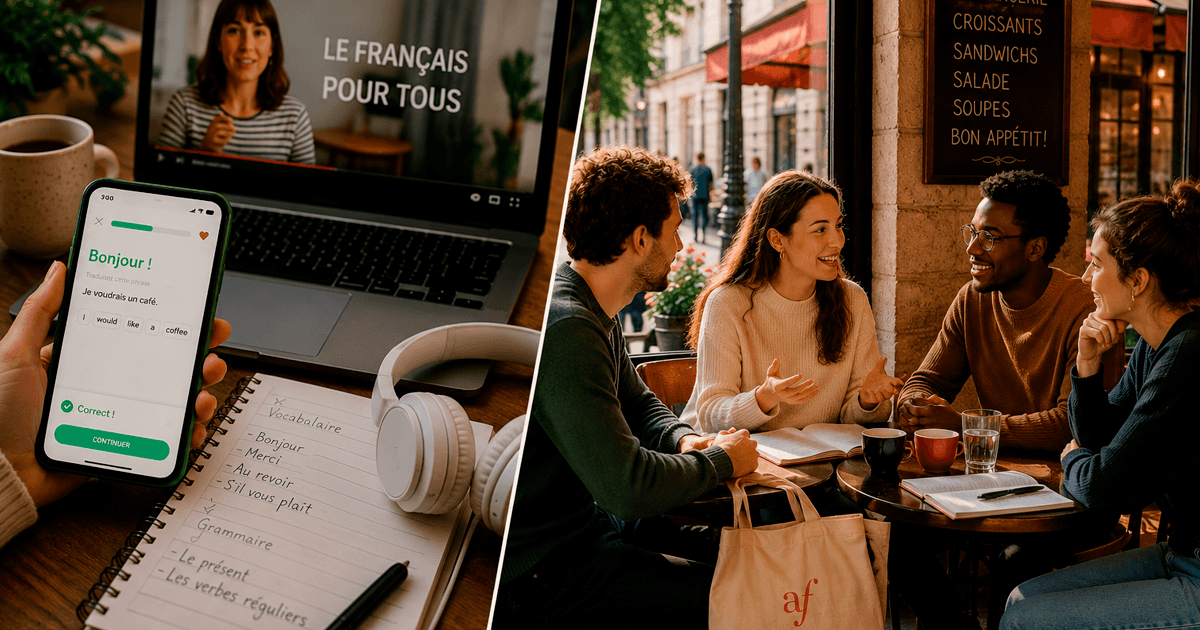
Today, learners have access to language apps, YouTube channels, podcasts, online videos, and AI-powered tools that can generate exercises, answer questions, and even simulate conversations in French. These resources can be incredibly valuable. In fact, many successful learners use them every day. But while technology has transformed access to language learning, it has not changed the fundamental purpose of learning a language: communication.
As Kelly Goudin, Teaching Manager (Group Courses) at the Alliance Française de Montréal, explains: “Languages are first and foremost tools for communication.”
So where does a French language school fit into today’s learning landscape? Rather than replacing apps, videos, or AI, a language school can help learners transform these resources into a structured and meaningful learning journey.
Reason #1: A Structured Learning Path
One of the biggest challenges of self-directed learning is knowing what to learn next.
Apps, videos, and online resources often provide valuable content, but they rarely offer a complete roadmap that guides learners from one stage to the next.
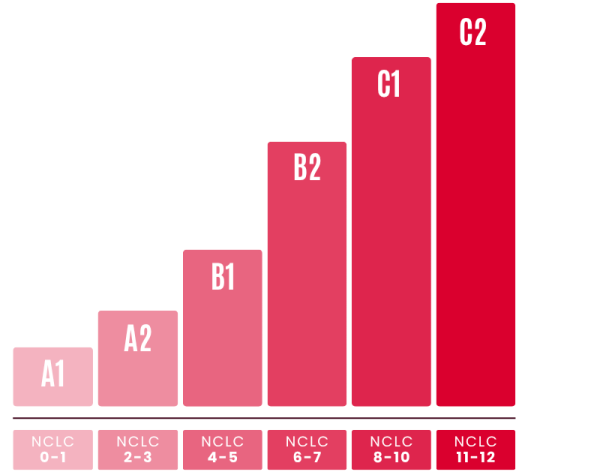
At the Alliance Française de Montréal, courses follow a clear progression based on the Common European Framework of Reference for Languages (CEFR), allowing students to build their skills step by step while working toward meaningful goals.
Rather than navigating disconnected lessons and exercises, learners follow a structured pathway designed to support steady and measurable progress.
This structure helps learners stay motivated, monitor their progress, and develop their skills with confidence over time.
Reason #2: Learning French Through Real Communication
One of the most common frustrations among language learners is understanding French but feeling uncomfortable speaking it.
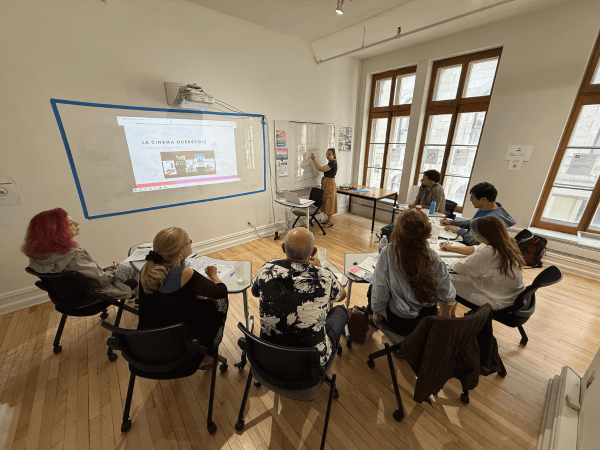
At the Alliance Française de Montréal, students are encouraged to use French from their very first class. Through activities tailored to each level, learners gradually develop confidence while using the language in meaningful situations. Rather than relying heavily on translation, courses emphasize interaction, communication, and practical language use.
The objective is not simply to learn about French, but to actively use it.
Reason #3: Personalized Guidance from Experienced Teachers
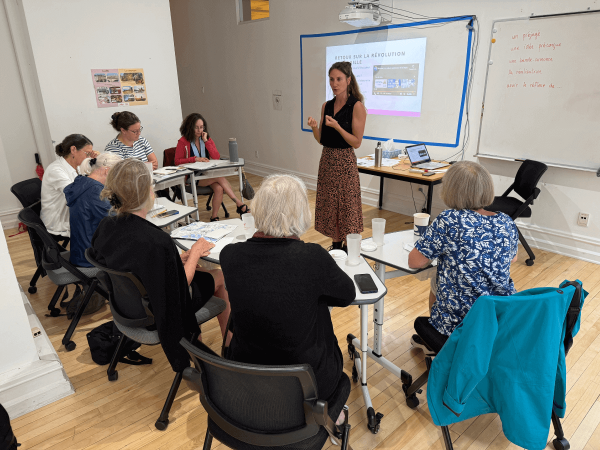
Technology can provide information. Teachers provide guidance. Apps may correct an exercise or suggest vocabulary, but experienced instructors can identify patterns, answer questions, adapt explanations, and provide feedback tailored to each learner’s needs.
At the Alliance Française de Montréal, students are guided by instructors specialized in French as a Foreign Language (FLE), who accompany them throughout their learning journey.
As Amélie Branconnier, Teaching Manager (Customized and Corporate Courses), points out: “Technology can be a valuable learning tool, but progress often happens when learners receive feedback, ask questions, and interact with others in meaningful ways.”
This personalized support helps learners overcome challenges, build confidence, and continue progressing toward their goals.
Reason #4: Small Groups Mean More Opportunities to Participate
Language learning is an active process.
Students learn not only by listening, but by asking questions, participating in discussions, and practicing with others.
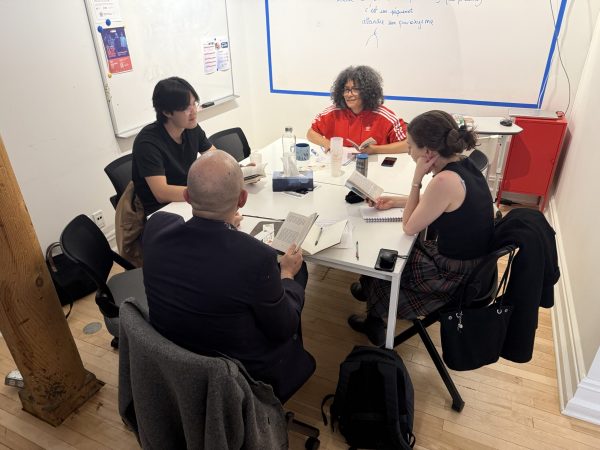
Because courses are taught in small groups, learners benefit from more opportunities to speak, receive feedback, and interact with both instructors and classmates.
Small-group learning also allows instructors to better understand each learner’s strengths, challenges, and objectives.
As one student explains: “I find the teachers to be very knowledgeable, and I really like the teaching methods. We learn in small groups, so every student has plenty of opportunities to speak and practice their French. It’s truly a great place to learn French.” — Debina, A1 level student
Reason #5: A Supportive Environment to Practice and Make Mistakes
Many learners hesitate to speak French because they are afraid of making mistakes.
Yet mistakes are a natural and necessary part of language learning. A classroom provides a supportive environment where learners can experiment, ask questions, test new structures, and build confidence without fear of judgment. This sense of psychological safety is often difficult to recreate through self-study tools alone.
As one student shared:
“I usually feel judged when I speak French in Quebec. Alliance Française is completely different.” — Ian, C1 level student
For many learners, developing confidence is just as important as developing linguistic knowledge.
Reason #6: More Than a French Language School
Learning French also means discovering the cultures that shape the language.
Beyond its courses, the Alliance Française de Montréal offers a cultural program organized by a dedicated cultural team. Students can participate in workshops, exhibitions, film screenings and discussions (ciné-rencontres), talks, and other events that showcase the diversity of the francophone world. These activities create additional opportunities to engage with authentic French while connecting with Montréal’s broader francophone community.
Students may also benefit from free admission or discounted rates for selected cultural activities. This cultural immersion is not only a complement to classroom learning; it also helps students develop their language skills in meaningful real-world contexts while deepening their understanding of francophone cultures.
Local Expertise, Global Experience
The Alliance Française de Montréal is part of a worldwide network dedicated to promoting the French language and francophone cultures.
Present in more than 130 countries, the Alliance Française network brings together institutions that share pedagogical expertise, teaching resources, and best practices in French language education. For learners, this means studying at an institution that combines local expertise with the experience and quality standards of a global francophone network.
Across Canada, 10 Alliance Française centres work together to strengthen the French language and francophone cultures through collaboration, community engagement, and shared initiatives.
Why Choose Between Them?
Apps, videos, podcasts, and AI can all play a valuable role in learning French. The question is not whether you should use these tools, it is how to use them effectively!
Rather than replacing technology, the Alliance Française de Montréal helps learners make the most of it.
Ready to Start Learning French?
Whether you are just beginning your French learning journey or looking to take the next step, the Alliance Française de Montréal offers more than a French language school experience. From structured courses and experienced instructors to cultural activities and opportunities to engage with Montréal’s francophone community, learners can immerse themselves in the language both inside and outside the classroom.